Homework at home: how you continue therapy as a family
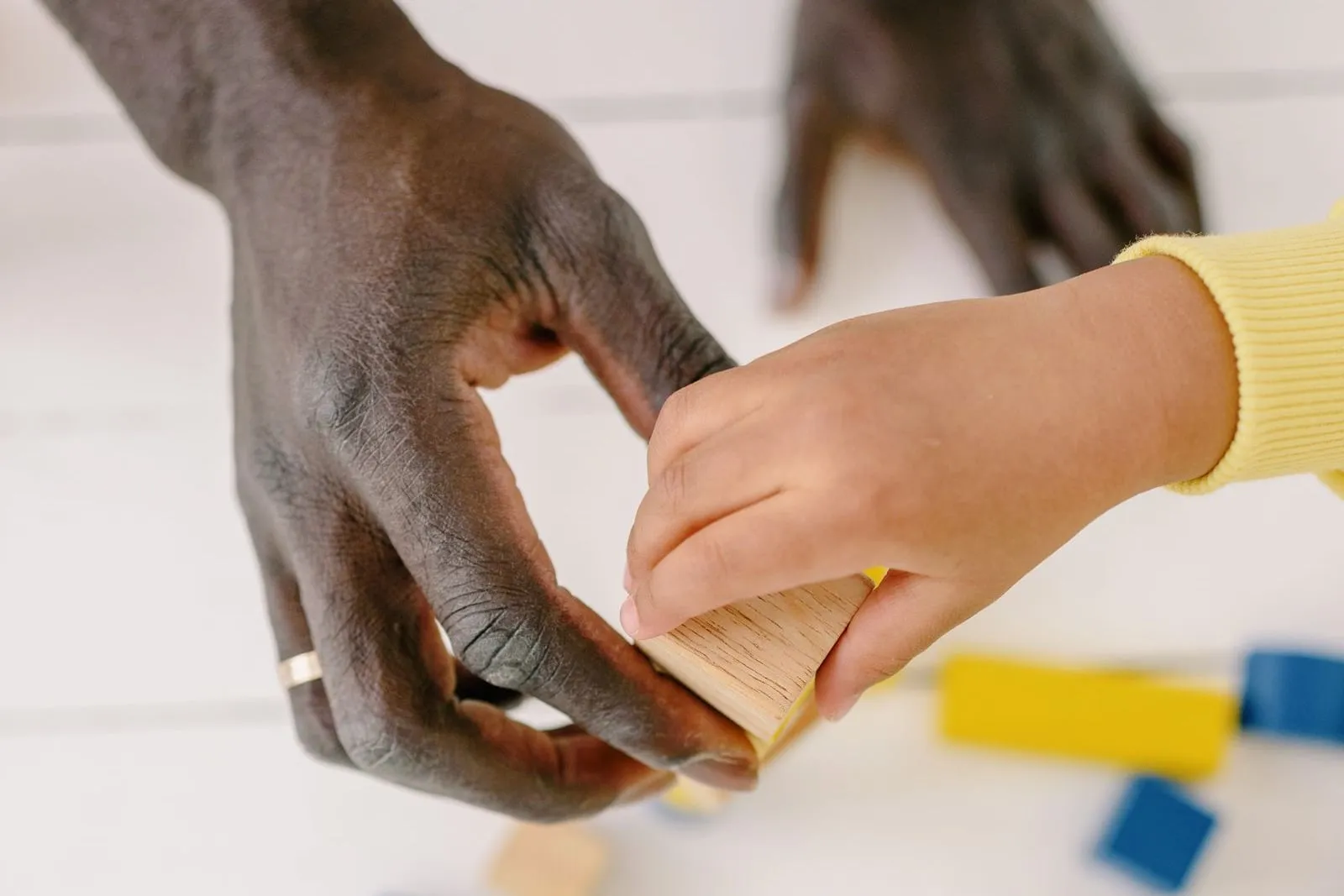
Your child spends a few hours a week in therapy. The rest of their life is at home, at nursery, at the grandparents', in the park. What they learn in the therapy room needs to show up with other people too, in other places, before it truly becomes theirs.
Homework is the bridge between these two worlds. It will not turn you into a therapist: just a few small things, chosen by the team, that fit into your ordinary days.
What kind of homework you might get
- A word or a request: the child asks for "ball" before you give it, or "bubbles" for you to blow soap bubbles. In speech therapy, it might be a sound or a few words, at the child's level. Ask the therapist what to do if it fails.
- A game: roll a ball to each other, build a tower in turns, hide a toy under a blanket. Simple games where the child practises turn-taking and shared attention with you.
- A step in a routine: the child takes off their socks, carries their cup to the sink, or picks up their towel after a bath. Just one step, the rest stays as usual.
- Homework for you: sometimes the task is for the adult: waiting a few seconds before helping so the child can try alone, or saying out loud what they are doing ("You're putting the block on top!") while you play.

In your routine, not in home "sessions"
The temptation is to sit the child at a table and "work" for half an hour, as at the centre. It often backfires: at home the child sees you as a parent, not a therapist, and the table becomes a place to avoid.
It works better to look for moments that already exist in your day:
- Morning: while getting dressed, one step they do on their own.
- At the table: requests, "more", "finished", "spoon".
- Bath time: a turn-taking game, the names of body parts.
- On the way somewhere: the sounds being practised, a song with gestures.
- Evening: a picture book and the question "Where's...?".
The child practises when they want something or when playing, and motivation comes naturally. If the team does recommend table time too, follow it.
A little, every day
A few tries at breakfast and a few at dinner already add up to a lot. You do not need a free hour.
- One or two tasks at a time: more becomes hard to keep track of, for you and the child.
- Stop while it is still going well: the child keeps a good memory, and returns to it more easily next time.
- Skip a day without guilt: when the child is ill or tired, or the day has been hard, a break beats extra tension.
- Ask what "enough" means: the therapist can tell you how many tries a day make sense for each task.

What to note down
You do not need a diary. A note on your phone or a sheet on the fridge is enough, with three things:
- What you tried, and at what point in the day.
- How it went: alone, with help, or not at all.
- What was unusual: a sleepless night, a visit, a new reaction.
For example: "Tuesday, at play, said 'ball' alone once. The second time, after I said 'b'." Two lines like that tell the therapist more than "it went well this week".
What to tell the therapist
- What worked: a task that succeeded at home is valuable information for the plan.
- What did not work, and why: too hard, no good moment in the day, the child refuses, or you found it hard to remember. Not a failure, just information: the task can be made easier, moved, or swapped for another.
- What you noticed that was new: a word said alone at the grandparents' house, a game the child asked for again. That is exactly what therapy aims for: skills that show up outside the therapy room too.
- Ask to see how it is done: a few minutes of a session, or a short demonstration, helps you use the same words and kind of help as the therapist.
Siblings and grandparents
The child understands what is expected more easily when adults respond the same way. The whole family need not know the plan: one simple rule is enough: "Wait for them to ask for the ball with a word, then give it to them."
- Siblings: can be playmates, not "little therapists". A turn-taking game they join for fun helps more than a task handed down by the parents. Tell them you notice when they are patient with their sibling.
- Grandparents: have their own habits and plenty of love to give. Explain why the rule matters, not just what to do, and choose one or two things, not ten. If the centre allows it, invite them to a session to see it for themselves.
In closing
Homework does not need to be perfect. What matters is that what is worked on in the therapy room shows up, little by little, in your own day too. And when something does not work, the child's team is there to adjust it with you.
In TempoApp, the homework set by the therapist appears in the parent portal, on your phone or computer, and whatever you noticed at home you can write to the therapist directly, in messages.